How Did the MKT Railroad Shape Katy, TX and Its Roots?

Updated: Aug 14
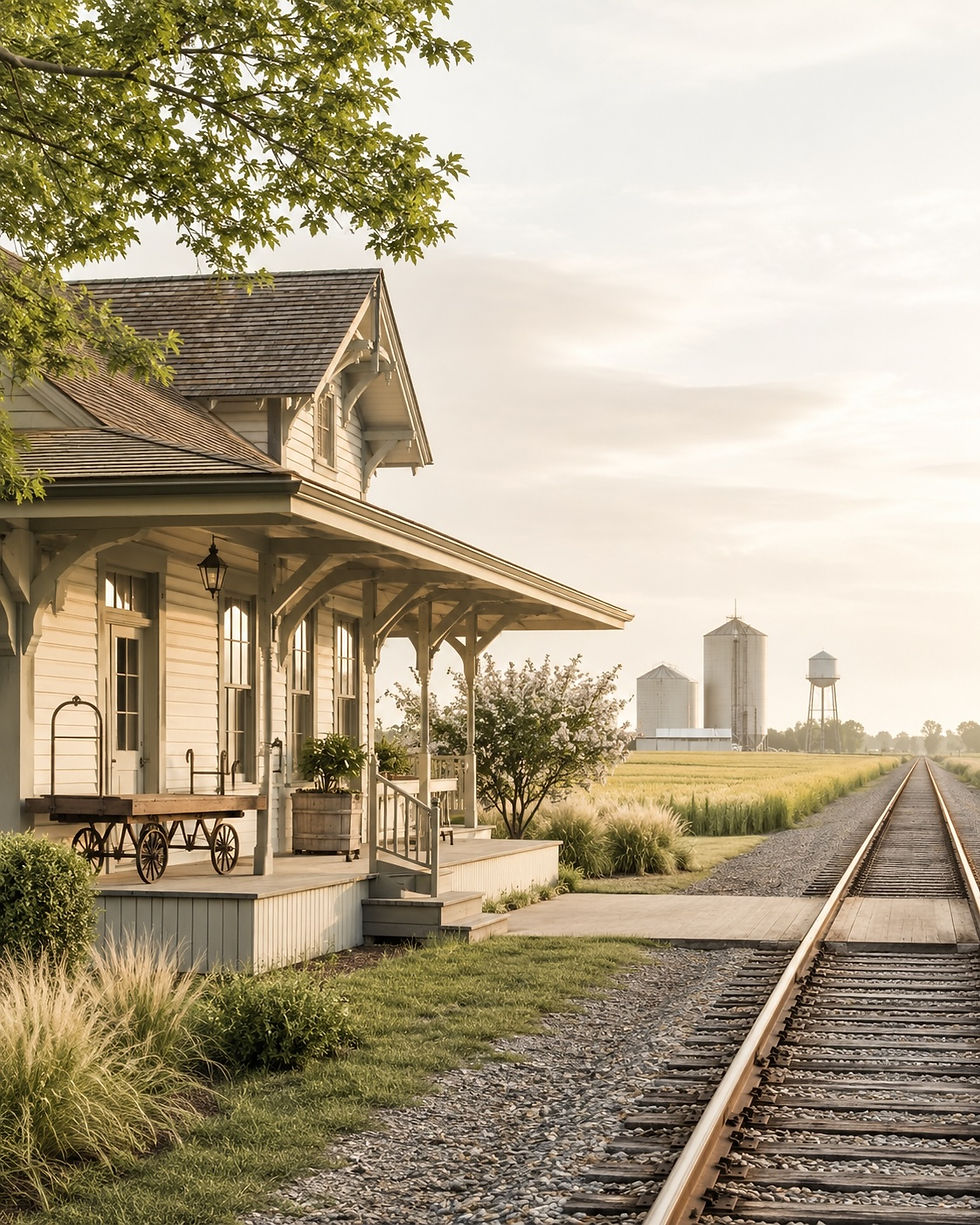
Katy, TX takes its name from the Missouri-Kansas-Texas Railroad — the "MKT" or "K-T" — which built through the prairie by 1893 and turned a rail stop into a rice-farming town in Harris, Fort Bend, and Waller counties.
TL;DR:
Niky Barker of The Barker Group at Keller Williams Signature covers how Katy, TX got its name and its roots. The town is named for the Missouri-Kansas-Texas Railroad — reporting mark "MKT," spoken as "the K-T," which locals softened into "Katy." The railroad built through the area by the end of 1893, a depot followed, and the settlement grew into a cotton, corn, and rice-farming hub in the Greater Houston Area. That heritage still shows up today in the restored MKT Depot, the historic rice dryers, and Katy Heritage Park. Understanding these roots helps buyers and sellers read the difference between Old Katy and the master-planned communities that surround it.
The MKT Railroad story is where Katy, TX begins. Niky Barker with The Barker Group at Keller Williams Signature works with buyers and sellers across Katy, TX a community spread across Harris, Fort Bend, and Waller counties in the Greater Houston Area and the town's railroad origin is one of the questions people ask most when they're getting to know the area. This is the story of how a rail line drew a name onto the map and built the roots that still shape Katy today.
What Is the MKT Railroad and How Did Katy, TX Get Its Name?
Katy, TX is named for the Missouri-Kansas-Texas Railroad, whose reporting mark "MKT" was spoken aloud as "the K-T" and eventually softened into "Katy." The MKT was built through the area that is now Katy by the end of 1893, the first railroad agent took up his duties in 1895, and the depot was completed by 1898. The line was a north-south granger railroad that, as its name implies, linked Missouri, Kansas, and Texas with connections reaching toward Houston and Galveston. Once trains began stopping regularly on the open prairie of west Harris County, families followed by train and wagon, and a town took shape around the tracks.
Why Was Katy, TX Named After a Railroad Instead of a Person?
Katy's name came from a railroad's nickname rather than a founder because the rail line arrived before the town did. When James Oliver Thomas laid out plans for a new town and applied for a post office in January 1896, the settlement was officially named Katy after the Missouri-Kansas-Texas Railroad, commonly known as the MKT or "the K-T." There's a competing local legend — one story attributes the name to an honorific for a saloonkeeper's wife — but the railroad account is the one most historians favor. The naming pattern was common across Texas: the tracks came first, a depot and post office followed, and the community organized itself around the stop.
How Did the MKT Railroad Turn Katy, TX Into a Farming Town?
The railroad gave Katy a way to ship crops to market, and that access is what turned prairie into a working agricultural economy. By the early 1900s Katy was thriving — farmers grew cotton, peanuts, and corn, but it was rice that transformed the region, and in 1944 the first concrete rice dryers in Texas were built there. Those rice dryers still stand as landmarks today. The town's early identity grew directly out of the "K-T" line and that agricultural legacy, and over the 20th century Katy shifted from a small railroad-and-farming community into one of Greater Houston's most prominent suburban areas along the I-10 corridor.
Later, the ground itself added a second chapter. The discovery well for the Katy gas field was drilled in 1934, and during World War II the size of the field's reserves plus the proximity of Houston refineries made Katy the most important gas-condensate field in the country — development that grew the population enough for the city to incorporate in 1945.
Where Can You Still See Katy's MKT Railroad Roots Today?
You can still see Katy's railroad roots in the restored MKT Depot in the heart of Old Katy. The historic Missouri-Kansas-Texas Depot has been restored to serve as an information and tourist center, and the Katy Heritage Society Railroad Museum inside it explains how the depot operated as passenger rail service in Katy until 1957. The adjacent Katy Railroad Park features landscaped grounds and the restored MKT Caboose No. 154, while Katy Heritage Park — operated by the Katy Heritage Society since 2003 — preserves historic homes and farming artifacts nearby. Even the antique rice dryers have found new life: the MKT Distillery now operates inside the town's iconic rice silos. Together, these sites trace Katy's arc from prairie rail stop to the Greater Houston suburb it is today.
How Does Katy's Origin Story Compare to Brookshire's?
Katy and nearby Brookshire share the same railroad but got their names in opposite ways. Both towns sit on the Missouri-Kansas-Texas line, and both were transformed by its 1893 arrival — but the naming and founding stories diverge:
Factor | Katy, TX | Brookshire, TX |
Namesake | The MKT Railroad ("K-T") | Capt. Nathen Brookshire, an early landowner |
County | Harris / Fort Bend / Waller | Waller County |
Railroad arrival | MKT built through by 1893 | MKT arrived 1893 |
Early cash crops | Cotton, corn, then rice | Cotton, then rice |
Incorporated | 1945 | 1946 |
Brookshire was named for Capt. Nathen Brookshire, who received a league of land as a member of Stephen F. Austin's fifth colony in 1835, and it grew into a thriving agricultural shipping point once the Missouri-Kansas-Texas Railroad arrived. Katy, seven miles east, took the opposite path — the railroad didn't just serve the town, it gave the town its name. It's a small distinction that captures how differently two neighbors on the same line came to be.
Why Does Katy's History Matter for Buyers and Sellers Today?
Katy's railroad history matters because it explains a distinction buyers and sellers navigate constantly: the difference between Old Katy and the master-planned communities that surround it. The original town the depot, the historic district, the rice silos grew up tight around the MKT tracks. The Katy that most newcomers move to today is largely the master-planned growth that spread along I-10 in the 1990s and 2000s. That's why a "Katy address" can mean very different things depending on where you look. For buyers, understanding that layering helps you read neighborhoods accurately. For sellers, the heritage of Old Katy is a genuine selling point that newer subdivisions can't replicate and pricing correctly means knowing which story your home tells.
What Do People Most Want to Know About Katy's MKT Railroad History?
Why is Katy, TX called Katy?Katy is named after the Missouri-Kansas-Texas Railroad. Railroaders wrote the company's reporting mark as "MKT" and said it aloud as "the K-T," which locals gradually softened into "Katy." When the town applied for a post office in 1896, that nickname became the official name. The rail line had already been built through the area by 1893, so the tracks and the name arrived before the town was formally organized.
What was the MKT Railroad?The MKT was the Missouri-Kansas-Texas Railroad, a north-south "granger" line nicknamed "the Katy." As its name suggests, it connected Missouri, Kansas, and Texas, with links reaching toward Houston and Galveston. It was the first railroad to enter Texas from the north. For the prairie west of Houston, the MKT was the connection to outside markets that made commercial farming and the town of Katy itself possible.
Where can you visit Katy's railroad history?You can visit the restored MKT Depot at 5615 First Street in Old Katy, which houses the Katy Heritage Society Railroad Museum and serves as the city's tourist center. Nearby, Katy Railroad Park displays the restored MKT Caboose No. 154, and Katy Heritage Park preserves historic homes and farming equipment. The antique rice dryers still stand as well, now home to the MKT Distillery.
How did rice farming shape Katy, TX?Rice became the crop that defined early Katy. After cotton, corn, and peanuts, the region's soil and irrigation access made it one of Texas's notable rice-producing areas and in 1944 the first concrete rice dryers in the state were built in Katy. Those silos remain landmarks today. Rice farming tied Katy's early economy directly to the MKT line, which shipped the harvest to market.
How did Katy grow from a railroad town into a Greater Houston suburb?Katy's growth came in layers. The MKT line and rice farming built the original town; the 1934 discovery of the Katy gas field brought a population boost that led to incorporation in 1945; and beginning in the 1990s, master-planned communities along the I-10 corridor in Harris, Fort Bend, and Waller counties turned Katy into one of the Greater Houston Area's fastest-growing suburbs while Old Katy kept its historic character.
Related reading: Living in Katy, TX: neighborhoods, homes, and lifestyle · Explore the Katy area with The Barker Group
Other Questions People Ask About Katy's History in Katy, TX
Is the MKT Depot in Katy open to the public?
What does "the Greater Katy area" include?
When was the city of Katy officially incorporated?
What happened to the MKT Railroad after 1957?
Are the Katy rice dryers still standing?
Curious about the community behind the name? Niky Barker and The Barker Group help buyers and sellers navigate both Old Katy and the master-planned communities across Katy, TX. Reach out anytime through The Barker Group's contact page to talk through your move.
About Niky Barker
Niky Barker is a REALTOR®, MRP, and AI-Certified agent and Team Leader at The Barker Group | Keller Williams Signature, serving buyers and sellers across Katy, Fulshear, Brookshire, Waller, Cypress, Tomball, Richmond, Sugar Land, Rosenberg, and Houston, TX and the Greater Houston area. Niky pairs local history and neighborhood knowledge with data-driven strategy to help clients understand not just where they're buying, but the story of the place. To connect, visit The Barker Group's contact page or call 917-399-7099
The Barker Group | Keller Williams Signature | 920 S Fry Rd, Katy, TX 77450