
Thinking About Living in Katy, TX? Here's What Buyers Should Know

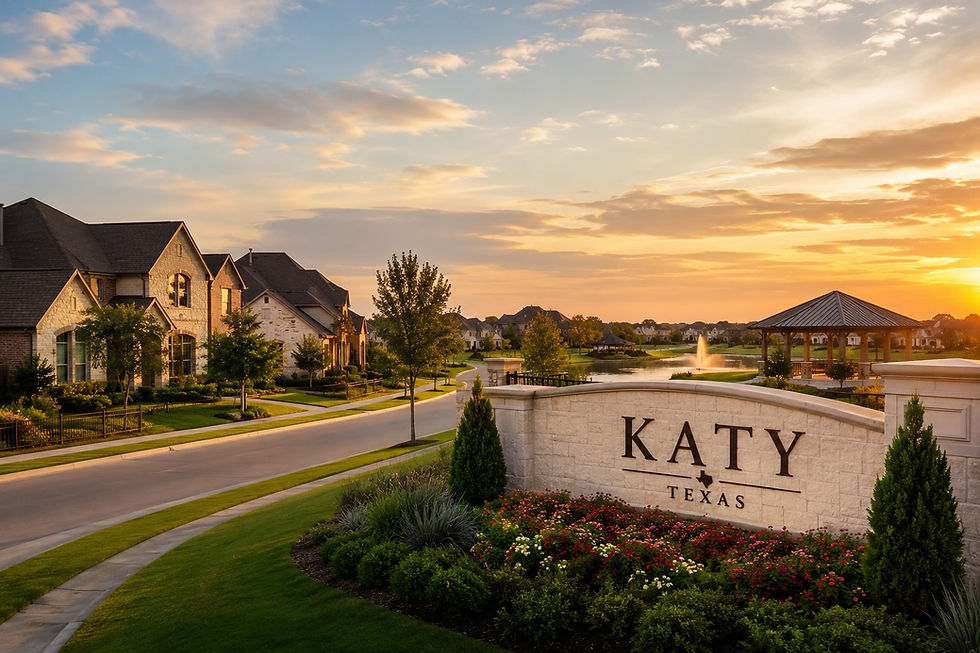
Living in Katy, TX means master-planned communities, I-10 and Grand Parkway access to Houston job centers, and a 2026 market with median home prices in the mid-$300Ks and roughly four months of inventory — giving buyers real negotiating room.
TL;DR:
Niky Barker with The Barker Group at Keller Williams Signature helps buyers move to Katy, TX, a western suburb spanning Fort Bend, Harris, and Waller counties in the Greater Houston Area. In 2026, Katy's median home price runs from the mid-$300Ks to about $410K depending on community, inventory sits near four months (a six-year high), and homes average roughly 38–50 days on market. That combination means buyers have more choice and negotiating leverage than they've had in years, while well-priced homes still move quickly. Katy is known for master-planned communities like Cinco Ranch, Cane Island, and Elyson, with commutes anchored by I-10, the Grand Parkway (SH-99), and the Westpark Tollway.
If you're thinking about living in Katy, TX, you're looking at one of the Greater Houston Area's most established western suburbs, a community that stretches across Fort Bend, Harris, and Waller counties, roughly 30 miles west of downtown Houston. Niky Barker, a REALTOR®, MRP, agent and team leader with the Barker Group at Keller Williams Signature, works with buyers relocating to Katy and the surrounding markets every week. This guide walks through what the move actually involves: the 2026 housing market, the master-planned communities Katy is known for, commute realities, and how Katy compares to nearby Richmond and Cypress.
What Is It Like Living in Katy, TX?
Living in Katy, TX means suburban master-planned communities, newer housing stock, and freeway access to Houston's major job centers. Katy is a western suburb of the Greater Houston Area that spans three counties: Fort Bend, Harris, and Waller; and centers on the ZIP codes 77449, 77450, 77493, and 77494. It's defined by large amenitized communities, on-site retail hubs like LaCenterra at Cinco Ranch and Katy Mills, and a housing profile that runs heavily toward single-family homes from the $300,000s into the millions. The area draws relocating buyers who want space, community amenities, and a manageable commute into Houston.
What Does the Katy, TX Housing Market Look Like in 2026?
The Katy housing market in 2026 is balanced and leaning buyer-favorable. Depending on how the boundary is drawn, the median sale price runs from the mid-$300Ks to around $410,000, and inventory has climbed to roughly four months of supply — a six-year high that gives buyers a level of choice not seen since before the pandemic. Homes are averaging somewhere between 38 and 50 days on the market, up meaningfully from the frantic pace of 2021–2023.
A few numbers worth knowing as you plan:
Metric | Katy, TX (2026) | What it signals |
Median price | ~$340K–$410K (varies by area) | Broad range across price points |
Months of inventory | ~4.1 months | Balanced, slight buyer edge |
Days on market | ~38–50 days | More time to decide |
Inventory YoY | Up ~13% | More options for buyers |
Mortgage rates | ~6% | The new baseline |
Regional forecasters expect Greater Houston existing-home sales to rebound in 2026, with modest low-to-mid single-digit price growth for many Katy resale homes. In plain terms: this isn't a crash, and it isn't the frenzy either, it's a market that rewards a clear plan.
Which Master-Planned Communities Should You Look at in Katy, TX?
Katy is organized largely around master-planned communities, each with its own price point and character. A helpful way to frame them: Cinco Ranch is the established resale benchmark, straddling both sides of the Grand Parkway south of I-10 and offering mature landscaping and deep resale history. Cane Island, on the north side of I-10 in Waller County, leans more upscale with homes generally starting in the low $500,000s and direct freeway access via the Cane Island Parkway exit. Elyson, in north Katy near the Grand Parkway and FM 529, is one of the newer communities, built around modern floor plans, greenbelts, and a planned town center. Cross Creek Ranch delivers resort-style amenities, lakes, and extensive trail networks toward the west.
Because HOA inclusions, tax rates, and amenity timelines vary by community and even by section within a community it's worth touring a few before you narrow down.
How Long Is the Commute From Katy, TX to Houston?
Commutes from Katy run primarily along I-10, the Grand Parkway (SH-99), and the Westpark Tollway, with typical drive times to major job centers ranging from about 30 minutes to an hour depending on destination and traffic. The Energy Corridor is the closest major employment hub, often 15–25 minutes from communities near I-10. Neighborhoods closest to I-10 and TX-99: like Cane Island, Elyson, and the eastern sections of Cinco Ranch, tend to give the most flexible freeway access. Katy sits inside Fort Bend County, Harris County, and Waller County depending on the exact address, all part of the Greater Houston Area in Texas, so your county and your commute can shift with the specific section you choose.
How Does Katy Compare to Richmond and Cypress, TX?
Katy, Richmond, and Cypress all draw similar relocating buyers, but they price and live differently. Here's how they stack up for a 2026 move:
Price: Katy's median runs roughly $340K–$410K depending on scope; Richmond sits lower at around $375–381K with a thinner, more variable resale market; Cypress runs a touch higher at approximately $407K.
Housing age: Katy is the most established of the three with the deepest resale inventory; Cypress leans newer and more amenity-heavy; Richmond offers a mix, often at lower price-per-square-foot.
Commute: Katy runs on I-10, SH-99, and the Westpark Tollway; Cypress relies on US-290, I-10, and the Grand Parkway; Richmond leans on the Grand Parkway and US-59/I-69 toward the southwest.
Market pace: All three are balanced-to-buyer-favorable in 2026, with expanded inventory, longer days on market, and builder incentives available in newer sections.
If you're weighing Cypress specifically, our Cypress relocation guide breaks that market down in the same depth.
Why Does This Matter for Buyers in Katy, TX Right Now?
Higher inventory in Katy, TX means buyers in 2026 have more negotiating power than they've had at any point since before the pandemic and that changes strategy. With roughly four months of supply and homes sitting closer to 38–50 days, you have room to negotiate on price, ask for seller-funded rate buydowns or closing-cost credits, and take time on inspections rather than waiving them. At the same time, well-priced, move-in-ready homes still move efficiently, so the leverage isn't unlimited. The practical takeaway: rather than waiting for rates to fall further, which most forecasters don't expect soon, many Katy buyers are locking in the right home now and planning to refinance later if rates ease.
What Do Buyers Most Want to Know About Living in Katy, TX?
What is the cost of living like in Katy, TX?Katy's cost of living centers on housing, with 2026 median home prices ranging from the mid-$300Ks to about $410,000 depending on the community and section. Property tax rates in master-planned communities often run in the 2.4%–2.9% range including MUD and school district taxes, so your monthly payment depends heavily on the specific neighborhood. Newer communities may carry higher rates tied to development bonds, while established areas like parts of Cinco Ranch can run lower.
Is Katy, TX a good place for first-time buyers?Katy works well for many first-time buyers in 2026 because expanded inventory and roughly four months of supply give you negotiating room and time to decide. You'll find entry points in the $300,000s in several communities, and builders in newer sections are offering incentives like rate buydowns. The main thing to plan for is the total monthly cost, since HOA dues and MUD taxes vary widely by neighborhood.
What counties is Katy, TX in?Katy spans three counties: Fort Bend, Harris, and Waller. Which one your home falls in depends on the exact address and section, since Katy grew outward across county lines within the Greater Houston Area. This matters for property taxes, voting, and some services, so it's worth confirming the county for any specific home before you write an offer.
How much home can you get for your money in Katy versus closer-in Houston?Katy generally offers more square footage and newer construction per dollar than closer-in Houston neighborhoods, which is a major reason relocating buyers choose it. The trade-off is a longer commute typically 30 minutes to an hour to central job centers via I-10 or the Grand Parkway. For buyers prioritizing space, community amenities, and newer homes, that trade often pencils out.
What should you do first when planning a move to Katy, TX?Start by getting pre-approved so you know your true budget including taxes and HOA dues, then tour two or three master-planned communities to compare feel, commute, and monthly cost. Because Katy's market is balanced in 2026, you have time to be deliberate. Working with a local agent who knows the section-by-section differences in Fort Bend, Harris, and Waller counties helps you avoid surprises on taxes and drive times.
Related reading: Katy real estate and community guide · Cypress, TX relocation guide
Other Questions Buyers Ask About Living in Katy, TX
What are the flood considerations when buying in Katy, TX?
How far is Katy, TX from the Energy Corridor and downtown Houston?
Ready to Explore Living in Katy, TX?
If you're thinking about making the move, Niky Barker and Barker Group at Keller Williams Signature can help you compare Katy communities, understand the tri-county tax picture, and time your purchase to the 2026 market. Reach out through Barker Group's contact page to start a plan built around your budget and commute.
About Niky Barker
Niky Barker is a REALTOR®, MRP, real estate agent and Team Leader at the Barker Group | Keller Williams Signature, serving buyers and sellers across Katy, Fulshear, Brookshire, Waller, Cypress, Tomball, Richmond, Sugar Land, Rosenberg, and Houston, TX and the Greater Houston area. She helps relocating buyers navigate Katy's master-planned communities and tri-county tax and commute differences with a clear, data-driven plan. To connect, visit The Barker Group's contact page or call 917-399-7099.
Barker Group | Keller Williams Signature | 920 S Fry Rd, Katy, TX 77450


